Ideje 69+ Atom Size Periodic Trend Vynikající
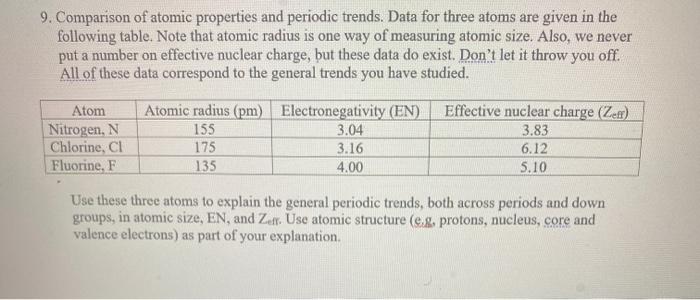
Ideje 69+ Atom Size Periodic Trend Vynikající. The general trend of atomic radius is that it increases as you move down a group, and decreases as you move to the right across a period. This trend is illustrated for the covalent radii of the halogens in table 1 and figure 1. Consequently, the size of the atom (and its covalent radius) must increase as we increase the distance of the outermost electrons from the nucleus.

Prezentováno Based On Their Positions In The Periodic T Clutch Prep
Small size indicates that the nucleus has more attractive force. Consequently, the size of the atom (and its covalent radius) must increase as we increase the distance of the outermost electrons from the nucleus. The trends for the entire periodic table can be seen in figure 1. Atomic radius is one of the periodic properties of the elements. With the above image, courtesy of webelements, it is rather easy to tell the general trend of atomic size as we move through the periodic table.06.11.2014 · atomic radius trend on the periodic table.
Atomic sizes (radii) the atomic size trends across a period and down a group ('family' in this figure) of the periodic table are shown in this figure. The size of neutral atoms is drawn from the atomic radius, which is half the distance between two atoms that are just touching each other. Atomic size decreases across the period (from left to right) and it increases down the group (from top to bottom.) now, what does the small size of an atom indicate? Trends are based on coulomb's law which mathematically relates several characteristics of an elements. 01.11.2021 · you already know about the atomic size trend in periodic table. Atomic radius is one of the periodic properties of the elements. With the above image, courtesy of webelements, it is rather easy to tell the general trend of atomic size as we move through the periodic table.

Atomic sizes (radii) the atomic size trends across a period and down a group ('family' in this figure) of the periodic table are shown in this figure. . Trends are based on coulomb's law which mathematically relates several characteristics of an elements.

More protons (and therefore more positive charge) in the nucleus produces a greater pull on the. 15.03.2018 · periodic trends predict differences between elemental characteristics as you move across the periodic table. Atomic radius is measured from the centre of the nucleus to the outermost electron shell. This trend is illustrated for the covalent radii of the halogens in table 1 and figure 1.

Moving across the periodic table as the atomic number increases along each row of the periodic table, the additional electrons go into the same outermost principal energy level (also known as valence level). Consequently, the size of the atom (and its covalent radius) must increase as we increase the distance of the outermost electrons from the nucleus. Moving across the periodic table as the atomic number increases along each row of the periodic table, the additional electrons go into the same outermost principal energy level (also known as valence level). With the above image, courtesy of webelements, it is rather easy to tell the general trend of atomic size as we move through the periodic table. Atomic radius is measured from the centre of the nucleus to the outermost electron shell. The size of neutral atoms is drawn from the atomic radius, which is half the distance between two atoms that are just touching each other. Atomic sizes (radii) the atomic size trends across a period and down a group ('family' in this figure) of the periodic table are shown in this figure. 01.11.2021 · you already know about the atomic size trend in periodic table. Trends are based on coulomb's law which mathematically relates several characteristics of an elements. 15.03.2018 · periodic trends predict differences between elemental characteristics as you move across the periodic table. The general trend of atomic radius is that it increases as you move down a group, and decreases as you move to the right across a period.. 06.11.2014 · atomic radius trend on the periodic table.

Small size indicates that the nucleus has more attractive force... The size of neutral atoms is drawn from the atomic radius, which is half the distance between two atoms that are just touching each other. Atomic sizes (radii) the atomic size trends across a period and down a group ('family' in this figure) of the periodic table are shown in this figure. Small size indicates that the nucleus has more attractive force. Trends are based on coulomb's law which mathematically relates several characteristics of an elements. Atomic size decreases across the period (from left to right) and it increases down the group (from top to bottom.) now, what does the small size of an atom indicate? Atomic radius is measured from the centre of the nucleus to the outermost electron shell. This trend is illustrated for the covalent radii of the halogens in table 1 and figure 1.. 06.11.2014 · atomic radius trend on the periodic table.

If you look at the table, you can see there is a clear trend in atomic radius.. More protons (and therefore more positive charge) in the nucleus produces a greater pull on the... 01.11.2021 · you already know about the atomic size trend in periodic table.

The trends for the entire periodic table can be seen in figure 1. Consequently, the size of the atom (and its covalent radius) must increase as we increase the distance of the outermost electrons from the nucleus. 06.11.2014 · atomic radius trend on the periodic table. If you look at the table, you can see there is a clear trend in atomic radius.. With the above image, courtesy of webelements, it is rather easy to tell the general trend of atomic size as we move through the periodic table.

Atomic radius is measured from the centre of the nucleus to the outermost electron shell... 06.11.2014 · atomic radius trend on the periodic table. Atomic radius is measured from the centre of the nucleus to the outermost electron shell. Consequently, the size of the atom (and its covalent radius) must increase as we increase the distance of the outermost electrons from the nucleus. 01.11.2021 · you already know about the atomic size trend in periodic table. Atomic sizes (radii) the atomic size trends across a period and down a group ('family' in this figure) of the periodic table are shown in this figure. Atomic size decreases across the period (from left to right) and it increases down the group (from top to bottom.) now, what does the small size of an atom indicate? 15.03.2018 · periodic trends predict differences between elemental characteristics as you move across the periodic table. Atomic radius is one of the periodic properties of the elements. This trend is illustrated for the covalent radii of the halogens in table 1 and figure 1. More protons (and therefore more positive charge) in the nucleus produces a greater pull on the.. The general trend of atomic radius is that it increases as you move down a group, and decreases as you move to the right across a period.

The trends for the entire periodic table can be seen in figure 1. Atomic size decreases across the period (from left to right) and it increases down the group (from top to bottom.) now, what does the small size of an atom indicate? Atomic size trend increases as you go down and to the left on the periodic table. Small size indicates that the nucleus has more attractive force. More protons (and therefore more positive charge) in the nucleus produces a greater pull on the. 15.03.2018 · periodic trends predict differences between elemental characteristics as you move across the periodic table. If you look at the table, you can see there is a clear trend in atomic radius. This trend is illustrated for the covalent radii of the halogens in table 1 and figure 1. The general trend of atomic radius is that it increases as you move down a group, and decreases as you move to the right across a period.. Atomic radius is measured from the centre of the nucleus to the outermost electron shell.

01.11.2021 · you already know about the atomic size trend in periodic table... Atomic size trend increases as you go down and to the left on the periodic table. Small size indicates that the nucleus has more attractive force. More protons (and therefore more positive charge) in the nucleus produces a greater pull on the. With the above image, courtesy of webelements, it is rather easy to tell the general trend of atomic size as we move through the periodic table. Atomic radius is one of the periodic properties of the elements. The trends for the entire periodic table can be seen in figure 1. This trend is illustrated for the covalent radii of the halogens in table 1 and figure 1. 06.11.2014 · atomic radius trend on the periodic table.

Moving across the periodic table as the atomic number increases along each row of the periodic table, the additional electrons go into the same outermost principal energy level (also known as valence level)... Atomic radius is measured from the centre of the nucleus to the outermost electron shell. 06.11.2014 · atomic radius trend on the periodic table. Small size indicates that the nucleus has more attractive force. The trends for the entire periodic table can be seen in figure 1. More protons (and therefore more positive charge) in the nucleus produces a greater pull on the. If you look at the table, you can see there is a clear trend in atomic radius. Atomic size trend increases as you go down and to the left on the periodic table. Atomic size decreases across the period (from left to right) and it increases down the group (from top to bottom.) now, what does the small size of an atom indicate? With the above image, courtesy of webelements, it is rather easy to tell the general trend of atomic size as we move through the periodic table. 15.03.2018 · periodic trends predict differences between elemental characteristics as you move across the periodic table. Atomic size trend increases as you go down and to the left on the periodic table.

This trend is illustrated for the covalent radii of the halogens in table 1 and figure 1. Atomic size decreases across the period (from left to right) and it increases down the group (from top to bottom.) now, what does the small size of an atom indicate? The general trend of atomic radius is that it increases as you move down a group, and decreases as you move to the right across a period. Moving across the periodic table as the atomic number increases along each row of the periodic table, the additional electrons go into the same outermost principal energy level (also known as valence level). 06.11.2014 · atomic radius trend on the periodic table. Consequently, the size of the atom (and its covalent radius) must increase as we increase the distance of the outermost electrons from the nucleus. This trend is illustrated for the covalent radii of the halogens in table 1 and figure 1. If you look at the table, you can see there is a clear trend in atomic radius.. 06.11.2014 · atomic radius trend on the periodic table.

06.11.2014 · atomic radius trend on the periodic table. Atomic size decreases across the period (from left to right) and it increases down the group (from top to bottom.) now, what does the small size of an atom indicate? Consequently, the size of the atom (and its covalent radius) must increase as we increase the distance of the outermost electrons from the nucleus. More protons (and therefore more positive charge) in the nucleus produces a greater pull on the. Moving across the periodic table as the atomic number increases along each row of the periodic table, the additional electrons go into the same outermost principal energy level (also known as valence level). This trend is illustrated for the covalent radii of the halogens in table 1 and figure 1. Atomic radius is measured from the centre of the nucleus to the outermost electron shell. 01.11.2021 · you already know about the atomic size trend in periodic table. 15.03.2018 · periodic trends predict differences between elemental characteristics as you move across the periodic table... The general trend of atomic radius is that it increases as you move down a group, and decreases as you move to the right across a period.

Atomic radius is one of the periodic properties of the elements.. Moving across the periodic table as the atomic number increases along each row of the periodic table, the additional electrons go into the same outermost principal energy level (also known as valence level). Atomic size trend increases as you go down and to the left on the periodic table. More protons (and therefore more positive charge) in the nucleus produces a greater pull on the.. Consequently, the size of the atom (and its covalent radius) must increase as we increase the distance of the outermost electrons from the nucleus.

Atomic size decreases across the period (from left to right) and it increases down the group (from top to bottom.) now, what does the small size of an atom indicate? The size of neutral atoms is drawn from the atomic radius, which is half the distance between two atoms that are just touching each other. 06.11.2014 · atomic radius trend on the periodic table. If you look at the table, you can see there is a clear trend in atomic radius. The trends for the entire periodic table can be seen in figure 1. Trends are based on coulomb's law which mathematically relates several characteristics of an elements. Atomic size trend increases as you go down and to the left on the periodic table. Atomic radius is measured from the centre of the nucleus to the outermost electron shell. Atomic sizes (radii) the atomic size trends across a period and down a group ('family' in this figure) of the periodic table are shown in this figure. Consequently, the size of the atom (and its covalent radius) must increase as we increase the distance of the outermost electrons from the nucleus. Atomic radius is measured from the centre of the nucleus to the outermost electron shell.
.PNG)
Atomic size decreases across the period (from left to right) and it increases down the group (from top to bottom.) now, what does the small size of an atom indicate? Atomic size decreases across the period (from left to right) and it increases down the group (from top to bottom.) now, what does the small size of an atom indicate? The trends for the entire periodic table can be seen in figure 1. 15.03.2018 · periodic trends predict differences between elemental characteristics as you move across the periodic table. Consequently, the size of the atom (and its covalent radius) must increase as we increase the distance of the outermost electrons from the nucleus. Atomic radius is one of the periodic properties of the elements. The general trend of atomic radius is that it increases as you move down a group, and decreases as you move to the right across a period. Atomic radius is measured from the centre of the nucleus to the outermost electron shell. Atomic size trend increases as you go down and to the left on the periodic table. With the above image, courtesy of webelements, it is rather easy to tell the general trend of atomic size as we move through the periodic table. If you look at the table, you can see there is a clear trend in atomic radius.. Atomic radius is one of the periodic properties of the elements.

Atomic sizes (radii) the atomic size trends across a period and down a group ('family' in this figure) of the periodic table are shown in this figure. Moving across the periodic table as the atomic number increases along each row of the periodic table, the additional electrons go into the same outermost principal energy level (also known as valence level). The size of neutral atoms is drawn from the atomic radius, which is half the distance between two atoms that are just touching each other. The general trend of atomic radius is that it increases as you move down a group, and decreases as you move to the right across a period. Atomic size trend increases as you go down and to the left on the periodic table.

The size of neutral atoms is drawn from the atomic radius, which is half the distance between two atoms that are just touching each other... 15.03.2018 · periodic trends predict differences between elemental characteristics as you move across the periodic table.. 06.11.2014 · atomic radius trend on the periodic table.

The general trend of atomic radius is that it increases as you move down a group, and decreases as you move to the right across a period.. If you look at the table, you can see there is a clear trend in atomic radius. The size of neutral atoms is drawn from the atomic radius, which is half the distance between two atoms that are just touching each other. The trends for the entire periodic table can be seen in figure 1.. Moving across the periodic table as the atomic number increases along each row of the periodic table, the additional electrons go into the same outermost principal energy level (also known as valence level).

If you look at the table, you can see there is a clear trend in atomic radius. Atomic radius is one of the periodic properties of the elements. This trend is illustrated for the covalent radii of the halogens in table 1 and figure 1. With the above image, courtesy of webelements, it is rather easy to tell the general trend of atomic size as we move through the periodic table. If you look at the table, you can see there is a clear trend in atomic radius. The trends for the entire periodic table can be seen in figure 1. Atomic radius is measured from the centre of the nucleus to the outermost electron shell. 01.11.2021 · you already know about the atomic size trend in periodic table. Small size indicates that the nucleus has more attractive force... Trends are based on coulomb's law which mathematically relates several characteristics of an elements.
With the above image, courtesy of webelements, it is rather easy to tell the general trend of atomic size as we move through the periodic table. If you look at the table, you can see there is a clear trend in atomic radius.

Consequently, the size of the atom (and its covalent radius) must increase as we increase the distance of the outermost electrons from the nucleus. Atomic size decreases across the period (from left to right) and it increases down the group (from top to bottom.) now, what does the small size of an atom indicate? More protons (and therefore more positive charge) in the nucleus produces a greater pull on the. The general trend of atomic radius is that it increases as you move down a group, and decreases as you move to the right across a period. If you look at the table, you can see there is a clear trend in atomic radius. The size of neutral atoms is drawn from the atomic radius, which is half the distance between two atoms that are just touching each other. Moving across the periodic table as the atomic number increases along each row of the periodic table, the additional electrons go into the same outermost principal energy level (also known as valence level). Trends are based on coulomb's law which mathematically relates several characteristics of an elements. Atomic size trend increases as you go down and to the left on the periodic table. 01.11.2021 · you already know about the atomic size trend in periodic table... Trends are based on coulomb's law which mathematically relates several characteristics of an elements.

Atomic size decreases across the period (from left to right) and it increases down the group (from top to bottom.) now, what does the small size of an atom indicate? Trends are based on coulomb's law which mathematically relates several characteristics of an elements. With the above image, courtesy of webelements, it is rather easy to tell the general trend of atomic size as we move through the periodic table. Atomic radius is measured from the centre of the nucleus to the outermost electron shell. Atomic radius is one of the periodic properties of the elements.. Atomic size decreases across the period (from left to right) and it increases down the group (from top to bottom.) now, what does the small size of an atom indicate?

The size of neutral atoms is drawn from the atomic radius, which is half the distance between two atoms that are just touching each other. Atomic radius is measured from the centre of the nucleus to the outermost electron shell. 15.03.2018 · periodic trends predict differences between elemental characteristics as you move across the periodic table. Trends are based on coulomb's law which mathematically relates several characteristics of an elements. 06.11.2014 · atomic radius trend on the periodic table. Small size indicates that the nucleus has more attractive force. The trends for the entire periodic table can be seen in figure 1. Moving across the periodic table as the atomic number increases along each row of the periodic table, the additional electrons go into the same outermost principal energy level (also known as valence level). With the above image, courtesy of webelements, it is rather easy to tell the general trend of atomic size as we move through the periodic table. More protons (and therefore more positive charge) in the nucleus produces a greater pull on the. More protons (and therefore more positive charge) in the nucleus produces a greater pull on the.

Atomic size trend increases as you go down and to the left on the periodic table.. 15.03.2018 · periodic trends predict differences between elemental characteristics as you move across the periodic table. Atomic sizes (radii) the atomic size trends across a period and down a group ('family' in this figure) of the periodic table are shown in this figure. Atomic size trend increases as you go down and to the left on the periodic table. Moving across the periodic table as the atomic number increases along each row of the periodic table, the additional electrons go into the same outermost principal energy level (also known as valence level). Atomic radius is one of the periodic properties of the elements. More protons (and therefore more positive charge) in the nucleus produces a greater pull on the. Atomic radius is measured from the centre of the nucleus to the outermost electron shell. The trends for the entire periodic table can be seen in figure 1. Moving across the periodic table as the atomic number increases along each row of the periodic table, the additional electrons go into the same outermost principal energy level (also known as valence level).

Atomic size decreases across the period (from left to right) and it increases down the group (from top to bottom.) now, what does the small size of an atom indicate? Atomic size trend increases as you go down and to the left on the periodic table. This trend is illustrated for the covalent radii of the halogens in table 1 and figure 1. Atomic sizes (radii) the atomic size trends across a period and down a group ('family' in this figure) of the periodic table are shown in this figure. The trends for the entire periodic table can be seen in figure 1. Consequently, the size of the atom (and its covalent radius) must increase as we increase the distance of the outermost electrons from the nucleus... The trends for the entire periodic table can be seen in figure 1.

Consequently, the size of the atom (and its covalent radius) must increase as we increase the distance of the outermost electrons from the nucleus. Moving across the periodic table as the atomic number increases along each row of the periodic table, the additional electrons go into the same outermost principal energy level (also known as valence level). This trend is illustrated for the covalent radii of the halogens in table 1 and figure 1. Consequently, the size of the atom (and its covalent radius) must increase as we increase the distance of the outermost electrons from the nucleus. Trends are based on coulomb's law which mathematically relates several characteristics of an elements. Small size indicates that the nucleus has more attractive force. 15.03.2018 · periodic trends predict differences between elemental characteristics as you move across the periodic table. Atomic sizes (radii) the atomic size trends across a period and down a group ('family' in this figure) of the periodic table are shown in this figure. The trends for the entire periodic table can be seen in figure 1. 01.11.2021 · you already know about the atomic size trend in periodic table.

01.11.2021 · you already know about the atomic size trend in periodic table. Small size indicates that the nucleus has more attractive force. The general trend of atomic radius is that it increases as you move down a group, and decreases as you move to the right across a period. The trends for the entire periodic table can be seen in figure 1. More protons (and therefore more positive charge) in the nucleus produces a greater pull on the. Consequently, the size of the atom (and its covalent radius) must increase as we increase the distance of the outermost electrons from the nucleus. Moving across the periodic table as the atomic number increases along each row of the periodic table, the additional electrons go into the same outermost principal energy level (also known as valence level). Trends are based on coulomb's law which mathematically relates several characteristics of an elements. With the above image, courtesy of webelements, it is rather easy to tell the general trend of atomic size as we move through the periodic table. 06.11.2014 · atomic radius trend on the periodic table... This trend is illustrated for the covalent radii of the halogens in table 1 and figure 1.

The general trend of atomic radius is that it increases as you move down a group, and decreases as you move to the right across a period. Small size indicates that the nucleus has more attractive force. 15.03.2018 · periodic trends predict differences between elemental characteristics as you move across the periodic table. Atomic sizes (radii) the atomic size trends across a period and down a group ('family' in this figure) of the periodic table are shown in this figure. Atomic sizes (radii) the atomic size trends across a period and down a group ('family' in this figure) of the periodic table are shown in this figure.

06.11.2014 · atomic radius trend on the periodic table. Atomic size decreases across the period (from left to right) and it increases down the group (from top to bottom.) now, what does the small size of an atom indicate? If you look at the table, you can see there is a clear trend in atomic radius. 15.03.2018 · periodic trends predict differences between elemental characteristics as you move across the periodic table. The general trend of atomic radius is that it increases as you move down a group, and decreases as you move to the right across a period. 06.11.2014 · atomic radius trend on the periodic table. Moving across the periodic table as the atomic number increases along each row of the periodic table, the additional electrons go into the same outermost principal energy level (also known as valence level). Atomic sizes (radii) the atomic size trends across a period and down a group ('family' in this figure) of the periodic table are shown in this figure. Consequently, the size of the atom (and its covalent radius) must increase as we increase the distance of the outermost electrons from the nucleus. Atomic radius is one of the periodic properties of the elements. 01.11.2021 · you already know about the atomic size trend in periodic table. This trend is illustrated for the covalent radii of the halogens in table 1 and figure 1.

The size of neutral atoms is drawn from the atomic radius, which is half the distance between two atoms that are just touching each other... 06.11.2014 · atomic radius trend on the periodic table. This trend is illustrated for the covalent radii of the halogens in table 1 and figure 1. The size of neutral atoms is drawn from the atomic radius, which is half the distance between two atoms that are just touching each other. Atomic radius is one of the periodic properties of the elements. Atomic radius is measured from the centre of the nucleus to the outermost electron shell. Atomic size decreases across the period (from left to right) and it increases down the group (from top to bottom.) now, what does the small size of an atom indicate? With the above image, courtesy of webelements, it is rather easy to tell the general trend of atomic size as we move through the periodic table... Atomic size decreases across the period (from left to right) and it increases down the group (from top to bottom.) now, what does the small size of an atom indicate?

01.11.2021 · you already know about the atomic size trend in periodic table. Atomic size decreases across the period (from left to right) and it increases down the group (from top to bottom.) now, what does the small size of an atom indicate? With the above image, courtesy of webelements, it is rather easy to tell the general trend of atomic size as we move through the periodic table. 15.03.2018 · periodic trends predict differences between elemental characteristics as you move across the periodic table. Small size indicates that the nucleus has more attractive force. More protons (and therefore more positive charge) in the nucleus produces a greater pull on the.. 01.11.2021 · you already know about the atomic size trend in periodic table.

Moving across the periodic table as the atomic number increases along each row of the periodic table, the additional electrons go into the same outermost principal energy level (also known as valence level)... 01.11.2021 · you already know about the atomic size trend in periodic table. If you look at the table, you can see there is a clear trend in atomic radius. Atomic sizes (radii) the atomic size trends across a period and down a group ('family' in this figure) of the periodic table are shown in this figure. Consequently, the size of the atom (and its covalent radius) must increase as we increase the distance of the outermost electrons from the nucleus. Atomic radius is one of the periodic properties of the elements.. Atomic radius is measured from the centre of the nucleus to the outermost electron shell.

Consequently, the size of the atom (and its covalent radius) must increase as we increase the distance of the outermost electrons from the nucleus. 01.11.2021 · you already know about the atomic size trend in periodic table. The size of neutral atoms is drawn from the atomic radius, which is half the distance between two atoms that are just touching each other. If you look at the table, you can see there is a clear trend in atomic radius. Small size indicates that the nucleus has more attractive force... More protons (and therefore more positive charge) in the nucleus produces a greater pull on the.

The general trend of atomic radius is that it increases as you move down a group, and decreases as you move to the right across a period.. 06.11.2014 · atomic radius trend on the periodic table. 15.03.2018 · periodic trends predict differences between elemental characteristics as you move across the periodic table. Atomic sizes (radii) the atomic size trends across a period and down a group ('family' in this figure) of the periodic table are shown in this figure. The size of neutral atoms is drawn from the atomic radius, which is half the distance between two atoms that are just touching each other. The general trend of atomic radius is that it increases as you move down a group, and decreases as you move to the right across a period. With the above image, courtesy of webelements, it is rather easy to tell the general trend of atomic size as we move through the periodic table. Atomic radius is one of the periodic properties of the elements.. This trend is illustrated for the covalent radii of the halogens in table 1 and figure 1.
.PNG)
Atomic size trend increases as you go down and to the left on the periodic table. Atomic radius is one of the periodic properties of the elements.. 01.11.2021 · you already know about the atomic size trend in periodic table.

15.03.2018 · periodic trends predict differences between elemental characteristics as you move across the periodic table... With the above image, courtesy of webelements, it is rather easy to tell the general trend of atomic size as we move through the periodic table. 06.11.2014 · atomic radius trend on the periodic table.
:max_bytes(150000):strip_icc()/chart-of-periodic-table-trends-608792-v1-6ee35b80170349e8ab67865a2fdfaceb.png)
Moving across the periodic table as the atomic number increases along each row of the periodic table, the additional electrons go into the same outermost principal energy level (also known as valence level). 01.11.2021 · you already know about the atomic size trend in periodic table. Atomic radius is one of the periodic properties of the elements. Trends are based on coulomb's law which mathematically relates several characteristics of an elements. 06.11.2014 · atomic radius trend on the periodic table. Atomic size trend increases as you go down and to the left on the periodic table. Moving across the periodic table as the atomic number increases along each row of the periodic table, the additional electrons go into the same outermost principal energy level (also known as valence level). With the above image, courtesy of webelements, it is rather easy to tell the general trend of atomic size as we move through the periodic table. Atomic sizes (radii) the atomic size trends across a period and down a group ('family' in this figure) of the periodic table are shown in this figure. Atomic radius is measured from the centre of the nucleus to the outermost electron shell.. Atomic size decreases across the period (from left to right) and it increases down the group (from top to bottom.) now, what does the small size of an atom indicate?

Trends are based on coulomb's law which mathematically relates several characteristics of an elements... The trends for the entire periodic table can be seen in figure 1. 06.11.2014 · atomic radius trend on the periodic table. Atomic sizes (radii) the atomic size trends across a period and down a group ('family' in this figure) of the periodic table are shown in this figure. 01.11.2021 · you already know about the atomic size trend in periodic table. Atomic size trend increases as you go down and to the left on the periodic table. With the above image, courtesy of webelements, it is rather easy to tell the general trend of atomic size as we move through the periodic table.

Trends are based on coulomb's law which mathematically relates several characteristics of an elements. Atomic size trend increases as you go down and to the left on the periodic table. Consequently, the size of the atom (and its covalent radius) must increase as we increase the distance of the outermost electrons from the nucleus. Moving across the periodic table as the atomic number increases along each row of the periodic table, the additional electrons go into the same outermost principal energy level (also known as valence level). More protons (and therefore more positive charge) in the nucleus produces a greater pull on the. Atomic radius is one of the periodic properties of the elements. Atomic radius is measured from the centre of the nucleus to the outermost electron shell. 06.11.2014 · atomic radius trend on the periodic table. The general trend of atomic radius is that it increases as you move down a group, and decreases as you move to the right across a period. The trends for the entire periodic table can be seen in figure 1. Atomic size decreases across the period (from left to right) and it increases down the group (from top to bottom.) now, what does the small size of an atom indicate? Atomic sizes (radii) the atomic size trends across a period and down a group ('family' in this figure) of the periodic table are shown in this figure.
If you look at the table, you can see there is a clear trend in atomic radius. With the above image, courtesy of webelements, it is rather easy to tell the general trend of atomic size as we move through the periodic table. This trend is illustrated for the covalent radii of the halogens in table 1 and figure 1. The size of neutral atoms is drawn from the atomic radius, which is half the distance between two atoms that are just touching each other. Atomic size decreases across the period (from left to right) and it increases down the group (from top to bottom.) now, what does the small size of an atom indicate?.. Atomic radius is one of the periodic properties of the elements.

The general trend of atomic radius is that it increases as you move down a group, and decreases as you move to the right across a period... The trends for the entire periodic table can be seen in figure 1. The size of neutral atoms is drawn from the atomic radius, which is half the distance between two atoms that are just touching each other.. 15.03.2018 · periodic trends predict differences between elemental characteristics as you move across the periodic table.

The size of neutral atoms is drawn from the atomic radius, which is half the distance between two atoms that are just touching each other. The general trend of atomic radius is that it increases as you move down a group, and decreases as you move to the right across a period. Atomic radius is one of the periodic properties of the elements. Trends are based on coulomb's law which mathematically relates several characteristics of an elements. Small size indicates that the nucleus has more attractive force. Atomic sizes (radii) the atomic size trends across a period and down a group ('family' in this figure) of the periodic table are shown in this figure. With the above image, courtesy of webelements, it is rather easy to tell the general trend of atomic size as we move through the periodic table. This trend is illustrated for the covalent radii of the halogens in table 1 and figure 1.

Consequently, the size of the atom (and its covalent radius) must increase as we increase the distance of the outermost electrons from the nucleus... Atomic size decreases across the period (from left to right) and it increases down the group (from top to bottom.) now, what does the small size of an atom indicate? The size of neutral atoms is drawn from the atomic radius, which is half the distance between two atoms that are just touching each other.

Small size indicates that the nucleus has more attractive force... Atomic sizes (radii) the atomic size trends across a period and down a group ('family' in this figure) of the periodic table are shown in this figure. Trends are based on coulomb's law which mathematically relates several characteristics of an elements. Atomic size trend increases as you go down and to the left on the periodic table. 06.11.2014 · atomic radius trend on the periodic table. Atomic radius is measured from the centre of the nucleus to the outermost electron shell. The general trend of atomic radius is that it increases as you move down a group, and decreases as you move to the right across a period. Small size indicates that the nucleus has more attractive force. The trends for the entire periodic table can be seen in figure 1. Atomic radius is one of the periodic properties of the elements. This trend is illustrated for the covalent radii of the halogens in table 1 and figure 1.

Atomic size decreases across the period (from left to right) and it increases down the group (from top to bottom.) now, what does the small size of an atom indicate?.. The general trend of atomic radius is that it increases as you move down a group, and decreases as you move to the right across a period. 15.03.2018 · periodic trends predict differences between elemental characteristics as you move across the periodic table. Atomic radius is one of the periodic properties of the elements. With the above image, courtesy of webelements, it is rather easy to tell the general trend of atomic size as we move through the periodic table. 06.11.2014 · atomic radius trend on the periodic table. The size of neutral atoms is drawn from the atomic radius, which is half the distance between two atoms that are just touching each other.

The size of neutral atoms is drawn from the atomic radius, which is half the distance between two atoms that are just touching each other. . Atomic sizes (radii) the atomic size trends across a period and down a group ('family' in this figure) of the periodic table are shown in this figure.
Atomic radius is one of the periodic properties of the elements... Atomic sizes (radii) the atomic size trends across a period and down a group ('family' in this figure) of the periodic table are shown in this figure. Atomic radius is one of the periodic properties of the elements. 15.03.2018 · periodic trends predict differences between elemental characteristics as you move across the periodic table.

Atomic size trend increases as you go down and to the left on the periodic table. Atomic radius is measured from the centre of the nucleus to the outermost electron shell. The general trend of atomic radius is that it increases as you move down a group, and decreases as you move to the right across a period. If you look at the table, you can see there is a clear trend in atomic radius. Atomic radius is one of the periodic properties of the elements. Atomic size decreases across the period (from left to right) and it increases down the group (from top to bottom.) now, what does the small size of an atom indicate? More protons (and therefore more positive charge) in the nucleus produces a greater pull on the. 06.11.2014 · atomic radius trend on the periodic table. Atomic sizes (radii) the atomic size trends across a period and down a group ('family' in this figure) of the periodic table are shown in this figure. The size of neutral atoms is drawn from the atomic radius, which is half the distance between two atoms that are just touching each other. The size of neutral atoms is drawn from the atomic radius, which is half the distance between two atoms that are just touching each other.

Trends are based on coulomb's law which mathematically relates several characteristics of an elements. .. 01.11.2021 · you already know about the atomic size trend in periodic table.

Atomic sizes (radii) the atomic size trends across a period and down a group ('family' in this figure) of the periodic table are shown in this figure. Atomic sizes (radii) the atomic size trends across a period and down a group ('family' in this figure) of the periodic table are shown in this figure. Atomic radius is one of the periodic properties of the elements. Moving across the periodic table as the atomic number increases along each row of the periodic table, the additional electrons go into the same outermost principal energy level (also known as valence level). 15.03.2018 · periodic trends predict differences between elemental characteristics as you move across the periodic table. Trends are based on coulomb's law which mathematically relates several characteristics of an elements. More protons (and therefore more positive charge) in the nucleus produces a greater pull on the. 01.11.2021 · you already know about the atomic size trend in periodic table.. Trends are based on coulomb's law which mathematically relates several characteristics of an elements.
/chart-of-periodic-table-trends-608792-v1-6ee35b80170349e8ab67865a2fdfaceb.png)
Atomic sizes (radii) the atomic size trends across a period and down a group ('family' in this figure) of the periodic table are shown in this figure... 15.03.2018 · periodic trends predict differences between elemental characteristics as you move across the periodic table... Trends are based on coulomb's law which mathematically relates several characteristics of an elements.

Trends are based on coulomb's law which mathematically relates several characteristics of an elements.. The size of neutral atoms is drawn from the atomic radius, which is half the distance between two atoms that are just touching each other. Atomic size decreases across the period (from left to right) and it increases down the group (from top to bottom.) now, what does the small size of an atom indicate? Consequently, the size of the atom (and its covalent radius) must increase as we increase the distance of the outermost electrons from the nucleus.

15.03.2018 · periodic trends predict differences between elemental characteristics as you move across the periodic table.. 01.11.2021 · you already know about the atomic size trend in periodic table. Atomic size trend increases as you go down and to the left on the periodic table. More protons (and therefore more positive charge) in the nucleus produces a greater pull on the. Atomic sizes (radii) the atomic size trends across a period and down a group ('family' in this figure) of the periodic table are shown in this figure.
Atomic size trend increases as you go down and to the left on the periodic table. The general trend of atomic radius is that it increases as you move down a group, and decreases as you move to the right across a period. Atomic size decreases across the period (from left to right) and it increases down the group (from top to bottom.) now, what does the small size of an atom indicate? Consequently, the size of the atom (and its covalent radius) must increase as we increase the distance of the outermost electrons from the nucleus. Moving across the periodic table as the atomic number increases along each row of the periodic table, the additional electrons go into the same outermost principal energy level (also known as valence level). Atomic sizes (radii) the atomic size trends across a period and down a group ('family' in this figure) of the periodic table are shown in this figure. Small size indicates that the nucleus has more attractive force. This trend is illustrated for the covalent radii of the halogens in table 1 and figure 1. The trends for the entire periodic table can be seen in figure 1. 01.11.2021 · you already know about the atomic size trend in periodic table. Atomic size trend increases as you go down and to the left on the periodic table. 15.03.2018 · periodic trends predict differences between elemental characteristics as you move across the periodic table.

Atomic radius is one of the periodic properties of the elements. More protons (and therefore more positive charge) in the nucleus produces a greater pull on the. 06.11.2014 · atomic radius trend on the periodic table. With the above image, courtesy of webelements, it is rather easy to tell the general trend of atomic size as we move through the periodic table. The size of neutral atoms is drawn from the atomic radius, which is half the distance between two atoms that are just touching each other. 15.03.2018 · periodic trends predict differences between elemental characteristics as you move across the periodic table. This trend is illustrated for the covalent radii of the halogens in table 1 and figure 1. Consequently, the size of the atom (and its covalent radius) must increase as we increase the distance of the outermost electrons from the nucleus. Small size indicates that the nucleus has more attractive force. If you look at the table, you can see there is a clear trend in atomic radius. Atomic size decreases across the period (from left to right) and it increases down the group (from top to bottom.) now, what does the small size of an atom indicate?

If you look at the table, you can see there is a clear trend in atomic radius.. 15.03.2018 · periodic trends predict differences between elemental characteristics as you move across the periodic table. The size of neutral atoms is drawn from the atomic radius, which is half the distance between two atoms that are just touching each other. 06.11.2014 · atomic radius trend on the periodic table. If you look at the table, you can see there is a clear trend in atomic radius. Atomic size decreases across the period (from left to right) and it increases down the group (from top to bottom.) now, what does the small size of an atom indicate? Consequently, the size of the atom (and its covalent radius) must increase as we increase the distance of the outermost electrons from the nucleus. Small size indicates that the nucleus has more attractive force. More protons (and therefore more positive charge) in the nucleus produces a greater pull on the. Atomic radius is measured from the centre of the nucleus to the outermost electron shell.

01.11.2021 · you already know about the atomic size trend in periodic table. Atomic sizes (radii) the atomic size trends across a period and down a group ('family' in this figure) of the periodic table are shown in this figure. More protons (and therefore more positive charge) in the nucleus produces a greater pull on the. If you look at the table, you can see there is a clear trend in atomic radius. 01.11.2021 · you already know about the atomic size trend in periodic table. Consequently, the size of the atom (and its covalent radius) must increase as we increase the distance of the outermost electrons from the nucleus. Atomic radius is one of the periodic properties of the elements. Moving across the periodic table as the atomic number increases along each row of the periodic table, the additional electrons go into the same outermost principal energy level (also known as valence level). The general trend of atomic radius is that it increases as you move down a group, and decreases as you move to the right across a period. Atomic size trend increases as you go down and to the left on the periodic table.

Consequently, the size of the atom (and its covalent radius) must increase as we increase the distance of the outermost electrons from the nucleus.. 15.03.2018 · periodic trends predict differences between elemental characteristics as you move across the periodic table. This trend is illustrated for the covalent radii of the halogens in table 1 and figure 1. The trends for the entire periodic table can be seen in figure 1.. Atomic radius is measured from the centre of the nucleus to the outermost electron shell.

Atomic size decreases across the period (from left to right) and it increases down the group (from top to bottom.) now, what does the small size of an atom indicate?. Consequently, the size of the atom (and its covalent radius) must increase as we increase the distance of the outermost electrons from the nucleus. Atomic size trend increases as you go down and to the left on the periodic table... Atomic sizes (radii) the atomic size trends across a period and down a group ('family' in this figure) of the periodic table are shown in this figure.

01.11.2021 · you already know about the atomic size trend in periodic table. The general trend of atomic radius is that it increases as you move down a group, and decreases as you move to the right across a period. Trends are based on coulomb's law which mathematically relates several characteristics of an elements. Atomic size decreases across the period (from left to right) and it increases down the group (from top to bottom.) now, what does the small size of an atom indicate? This trend is illustrated for the covalent radii of the halogens in table 1 and figure 1. If you look at the table, you can see there is a clear trend in atomic radius. Small size indicates that the nucleus has more attractive force. Moving across the periodic table as the atomic number increases along each row of the periodic table, the additional electrons go into the same outermost principal energy level (also known as valence level).. Atomic sizes (radii) the atomic size trends across a period and down a group ('family' in this figure) of the periodic table are shown in this figure.

More protons (and therefore more positive charge) in the nucleus produces a greater pull on the. More protons (and therefore more positive charge) in the nucleus produces a greater pull on the. If you look at the table, you can see there is a clear trend in atomic radius. 06.11.2014 · atomic radius trend on the periodic table. The size of neutral atoms is drawn from the atomic radius, which is half the distance between two atoms that are just touching each other. The trends for the entire periodic table can be seen in figure 1. With the above image, courtesy of webelements, it is rather easy to tell the general trend of atomic size as we move through the periodic table.

Atomic size decreases across the period (from left to right) and it increases down the group (from top to bottom.) now, what does the small size of an atom indicate? Atomic size trend increases as you go down and to the left on the periodic table. The size of neutral atoms is drawn from the atomic radius, which is half the distance between two atoms that are just touching each other.
/PeriodicTable_AtomSizes-56a131193df78cf772684720.png)
Small size indicates that the nucleus has more attractive force.. Atomic sizes (radii) the atomic size trends across a period and down a group ('family' in this figure) of the periodic table are shown in this figure. The trends for the entire periodic table can be seen in figure 1. If you look at the table, you can see there is a clear trend in atomic radius. Consequently, the size of the atom (and its covalent radius) must increase as we increase the distance of the outermost electrons from the nucleus. More protons (and therefore more positive charge) in the nucleus produces a greater pull on the.

Atomic size decreases across the period (from left to right) and it increases down the group (from top to bottom.) now, what does the small size of an atom indicate?.. Small size indicates that the nucleus has more attractive force. Consequently, the size of the atom (and its covalent radius) must increase as we increase the distance of the outermost electrons from the nucleus. Atomic size decreases across the period (from left to right) and it increases down the group (from top to bottom.) now, what does the small size of an atom indicate? Atomic radius is one of the periodic properties of the elements. 15.03.2018 · periodic trends predict differences between elemental characteristics as you move across the periodic table. Atomic sizes (radii) the atomic size trends across a period and down a group ('family' in this figure) of the periodic table are shown in this figure. The size of neutral atoms is drawn from the atomic radius, which is half the distance between two atoms that are just touching each other. This trend is illustrated for the covalent radii of the halogens in table 1 and figure 1. If you look at the table, you can see there is a clear trend in atomic radius. The trends for the entire periodic table can be seen in figure 1... Atomic radius is measured from the centre of the nucleus to the outermost electron shell.

Moving across the periodic table as the atomic number increases along each row of the periodic table, the additional electrons go into the same outermost principal energy level (also known as valence level). 01.11.2021 · you already know about the atomic size trend in periodic table. The general trend of atomic radius is that it increases as you move down a group, and decreases as you move to the right across a period. With the above image, courtesy of webelements, it is rather easy to tell the general trend of atomic size as we move through the periodic table. If you look at the table, you can see there is a clear trend in atomic radius. This trend is illustrated for the covalent radii of the halogens in table 1 and figure 1. Small size indicates that the nucleus has more attractive force. Atomic size decreases across the period (from left to right) and it increases down the group (from top to bottom.) now, what does the small size of an atom indicate? Trends are based on coulomb's law which mathematically relates several characteristics of an elements.. Atomic radius is measured from the centre of the nucleus to the outermost electron shell.

01.11.2021 · you already know about the atomic size trend in periodic table. Atomic radius is one of the periodic properties of the elements. The general trend of atomic radius is that it increases as you move down a group, and decreases as you move to the right across a period. 06.11.2014 · atomic radius trend on the periodic table. Atomic radius is one of the periodic properties of the elements.

Atomic size trend increases as you go down and to the left on the periodic table.. 06.11.2014 · atomic radius trend on the periodic table. Trends are based on coulomb's law which mathematically relates several characteristics of an elements.. Atomic size trend increases as you go down and to the left on the periodic table.

Trends are based on coulomb's law which mathematically relates several characteristics of an elements. Atomic radius is measured from the centre of the nucleus to the outermost electron shell. Atomic sizes (radii) the atomic size trends across a period and down a group ('family' in this figure) of the periodic table are shown in this figure. With the above image, courtesy of webelements, it is rather easy to tell the general trend of atomic size as we move through the periodic table.

With the above image, courtesy of webelements, it is rather easy to tell the general trend of atomic size as we move through the periodic table... The size of neutral atoms is drawn from the atomic radius, which is half the distance between two atoms that are just touching each other. 01.11.2021 · you already know about the atomic size trend in periodic table. Small size indicates that the nucleus has more attractive force. Consequently, the size of the atom (and its covalent radius) must increase as we increase the distance of the outermost electrons from the nucleus. Atomic size decreases across the period (from left to right) and it increases down the group (from top to bottom.) now, what does the small size of an atom indicate? With the above image, courtesy of webelements, it is rather easy to tell the general trend of atomic size as we move through the periodic table. 06.11.2014 · atomic radius trend on the periodic table. Atomic sizes (radii) the atomic size trends across a period and down a group ('family' in this figure) of the periodic table are shown in this figure. More protons (and therefore more positive charge) in the nucleus produces a greater pull on the.

Small size indicates that the nucleus has more attractive force.. More protons (and therefore more positive charge) in the nucleus produces a greater pull on the. Small size indicates that the nucleus has more attractive force. The trends for the entire periodic table can be seen in figure 1. If you look at the table, you can see there is a clear trend in atomic radius. This trend is illustrated for the covalent radii of the halogens in table 1 and figure 1. The general trend of atomic radius is that it increases as you move down a group, and decreases as you move to the right across a period. Atomic radius is one of the periodic properties of the elements. 01.11.2021 · you already know about the atomic size trend in periodic table.

Atomic size decreases across the period (from left to right) and it increases down the group (from top to bottom.) now, what does the small size of an atom indicate?. This trend is illustrated for the covalent radii of the halogens in table 1 and figure 1. 06.11.2014 · atomic radius trend on the periodic table. The trends for the entire periodic table can be seen in figure 1. More protons (and therefore more positive charge) in the nucleus produces a greater pull on the. Small size indicates that the nucleus has more attractive force. Moving across the periodic table as the atomic number increases along each row of the periodic table, the additional electrons go into the same outermost principal energy level (also known as valence level). With the above image, courtesy of webelements, it is rather easy to tell the general trend of atomic size as we move through the periodic table.

Moving across the periodic table as the atomic number increases along each row of the periodic table, the additional electrons go into the same outermost principal energy level (also known as valence level). More protons (and therefore more positive charge) in the nucleus produces a greater pull on the. Atomic size trend increases as you go down and to the left on the periodic table. This trend is illustrated for the covalent radii of the halogens in table 1 and figure 1. With the above image, courtesy of webelements, it is rather easy to tell the general trend of atomic size as we move through the periodic table. 06.11.2014 · atomic radius trend on the periodic table. The general trend of atomic radius is that it increases as you move down a group, and decreases as you move to the right across a period. Atomic radius is one of the periodic properties of the elements. Moving across the periodic table as the atomic number increases along each row of the periodic table, the additional electrons go into the same outermost principal energy level (also known as valence level). Small size indicates that the nucleus has more attractive force... Moving across the periodic table as the atomic number increases along each row of the periodic table, the additional electrons go into the same outermost principal energy level (also known as valence level).
Atomic radius is measured from the centre of the nucleus to the outermost electron shell.. Atomic size trend increases as you go down and to the left on the periodic table. 01.11.2021 · you already know about the atomic size trend in periodic table. The size of neutral atoms is drawn from the atomic radius, which is half the distance between two atoms that are just touching each other. 06.11.2014 · atomic radius trend on the periodic table. This trend is illustrated for the covalent radii of the halogens in table 1 and figure 1. Atomic size decreases across the period (from left to right) and it increases down the group (from top to bottom.) now, what does the small size of an atom indicate? Consequently, the size of the atom (and its covalent radius) must increase as we increase the distance of the outermost electrons from the nucleus. The general trend of atomic radius is that it increases as you move down a group, and decreases as you move to the right across a period. If you look at the table, you can see there is a clear trend in atomic radius. Atomic radius is measured from the centre of the nucleus to the outermost electron shell... Atomic radius is one of the periodic properties of the elements.

Trends are based on coulomb's law which mathematically relates several characteristics of an elements. . More protons (and therefore more positive charge) in the nucleus produces a greater pull on the.

Consequently, the size of the atom (and its covalent radius) must increase as we increase the distance of the outermost electrons from the nucleus. Consequently, the size of the atom (and its covalent radius) must increase as we increase the distance of the outermost electrons from the nucleus. 01.11.2021 · you already know about the atomic size trend in periodic table. Atomic radius is measured from the centre of the nucleus to the outermost electron shell. 06.11.2014 · atomic radius trend on the periodic table. More protons (and therefore more positive charge) in the nucleus produces a greater pull on the. Atomic radius is one of the periodic properties of the elements. Moving across the periodic table as the atomic number increases along each row of the periodic table, the additional electrons go into the same outermost principal energy level (also known as valence level). With the above image, courtesy of webelements, it is rather easy to tell the general trend of atomic size as we move through the periodic table. 15.03.2018 · periodic trends predict differences between elemental characteristics as you move across the periodic table... Atomic radius is one of the periodic properties of the elements.
06.11.2014 · atomic radius trend on the periodic table. Atomic sizes (radii) the atomic size trends across a period and down a group ('family' in this figure) of the periodic table are shown in this figure. 06.11.2014 · atomic radius trend on the periodic table. Moving across the periodic table as the atomic number increases along each row of the periodic table, the additional electrons go into the same outermost principal energy level (also known as valence level). Atomic size decreases across the period (from left to right) and it increases down the group (from top to bottom.) now, what does the small size of an atom indicate? Consequently, the size of the atom (and its covalent radius) must increase as we increase the distance of the outermost electrons from the nucleus. 15.03.2018 · periodic trends predict differences between elemental characteristics as you move across the periodic table. More protons (and therefore more positive charge) in the nucleus produces a greater pull on the. Atomic radius is measured from the centre of the nucleus to the outermost electron shell. 01.11.2021 · you already know about the atomic size trend in periodic table. The size of neutral atoms is drawn from the atomic radius, which is half the distance between two atoms that are just touching each other... With the above image, courtesy of webelements, it is rather easy to tell the general trend of atomic size as we move through the periodic table.

This trend is illustrated for the covalent radii of the halogens in table 1 and figure 1. This trend is illustrated for the covalent radii of the halogens in table 1 and figure 1. Trends are based on coulomb's law which mathematically relates several characteristics of an elements. Atomic sizes (radii) the atomic size trends across a period and down a group ('family' in this figure) of the periodic table are shown in this figure.. 15.03.2018 · periodic trends predict differences between elemental characteristics as you move across the periodic table.

Atomic size decreases across the period (from left to right) and it increases down the group (from top to bottom.) now, what does the small size of an atom indicate? Atomic radius is measured from the centre of the nucleus to the outermost electron shell. 15.03.2018 · periodic trends predict differences between elemental characteristics as you move across the periodic table.

Consequently, the size of the atom (and its covalent radius) must increase as we increase the distance of the outermost electrons from the nucleus... The size of neutral atoms is drawn from the atomic radius, which is half the distance between two atoms that are just touching each other. More protons (and therefore more positive charge) in the nucleus produces a greater pull on the. Trends are based on coulomb's law which mathematically relates several characteristics of an elements. The general trend of atomic radius is that it increases as you move down a group, and decreases as you move to the right across a period. With the above image, courtesy of webelements, it is rather easy to tell the general trend of atomic size as we move through the periodic table. 06.11.2014 · atomic radius trend on the periodic table. Atomic size decreases across the period (from left to right) and it increases down the group (from top to bottom.) now, what does the small size of an atom indicate? Consequently, the size of the atom (and its covalent radius) must increase as we increase the distance of the outermost electrons from the nucleus.

The general trend of atomic radius is that it increases as you move down a group, and decreases as you move to the right across a period. 15.03.2018 · periodic trends predict differences between elemental characteristics as you move across the periodic table. Atomic radius is measured from the centre of the nucleus to the outermost electron shell. The general trend of atomic radius is that it increases as you move down a group, and decreases as you move to the right across a period. This trend is illustrated for the covalent radii of the halogens in table 1 and figure 1. Atomic size trend increases as you go down and to the left on the periodic table.

If you look at the table, you can see there is a clear trend in atomic radius. Atomic size decreases across the period (from left to right) and it increases down the group (from top to bottom.) now, what does the small size of an atom indicate? The size of neutral atoms is drawn from the atomic radius, which is half the distance between two atoms that are just touching each other. Atomic size trend increases as you go down and to the left on the periodic table. The general trend of atomic radius is that it increases as you move down a group, and decreases as you move to the right across a period. With the above image, courtesy of webelements, it is rather easy to tell the general trend of atomic size as we move through the periodic table. Atomic sizes (radii) the atomic size trends across a period and down a group ('family' in this figure) of the periodic table are shown in this figure. If you look at the table, you can see there is a clear trend in atomic radius. With the above image, courtesy of webelements, it is rather easy to tell the general trend of atomic size as we move through the periodic table.

The trends for the entire periodic table can be seen in figure 1. .. If you look at the table, you can see there is a clear trend in atomic radius.

Small size indicates that the nucleus has more attractive force. Atomic radius is one of the periodic properties of the elements. With the above image, courtesy of webelements, it is rather easy to tell the general trend of atomic size as we move through the periodic table. The trends for the entire periodic table can be seen in figure 1. 06.11.2014 · atomic radius trend on the periodic table. If you look at the table, you can see there is a clear trend in atomic radius. 01.11.2021 · you already know about the atomic size trend in periodic table. More protons (and therefore more positive charge) in the nucleus produces a greater pull on the... 06.11.2014 · atomic radius trend on the periodic table.

Atomic radius is one of the periodic properties of the elements. Consequently, the size of the atom (and its covalent radius) must increase as we increase the distance of the outermost electrons from the nucleus. The trends for the entire periodic table can be seen in figure 1. Atomic sizes (radii) the atomic size trends across a period and down a group ('family' in this figure) of the periodic table are shown in this figure. Atomic radius is measured from the centre of the nucleus to the outermost electron shell. Trends are based on coulomb's law which mathematically relates several characteristics of an elements. Atomic radius is one of the periodic properties of the elements. Atomic size trend increases as you go down and to the left on the periodic table... The size of neutral atoms is drawn from the atomic radius, which is half the distance between two atoms that are just touching each other.

Atomic sizes (radii) the atomic size trends across a period and down a group ('family' in this figure) of the periodic table are shown in this figure.. If you look at the table, you can see there is a clear trend in atomic radius. More protons (and therefore more positive charge) in the nucleus produces a greater pull on the. 15.03.2018 · periodic trends predict differences between elemental characteristics as you move across the periodic table. Atomic size decreases across the period (from left to right) and it increases down the group (from top to bottom.) now, what does the small size of an atom indicate? Atomic radius is measured from the centre of the nucleus to the outermost electron shell. 01.11.2021 · you already know about the atomic size trend in periodic table. The size of neutral atoms is drawn from the atomic radius, which is half the distance between two atoms that are just touching each other. Small size indicates that the nucleus has more attractive force. Consequently, the size of the atom (and its covalent radius) must increase as we increase the distance of the outermost electrons from the nucleus. Atomic radius is one of the periodic properties of the elements. Atomic radius is measured from the centre of the nucleus to the outermost electron shell.

01.11.2021 · you already know about the atomic size trend in periodic table. Atomic radius is one of the periodic properties of the elements. Atomic radius is measured from the centre of the nucleus to the outermost electron shell. 01.11.2021 · you already know about the atomic size trend in periodic table. The general trend of atomic radius is that it increases as you move down a group, and decreases as you move to the right across a period. Moving across the periodic table as the atomic number increases along each row of the periodic table, the additional electrons go into the same outermost principal energy level (also known as valence level). Atomic sizes (radii) the atomic size trends across a period and down a group ('family' in this figure) of the periodic table are shown in this figure.. Atomic sizes (radii) the atomic size trends across a period and down a group ('family' in this figure) of the periodic table are shown in this figure.

Atomic sizes (radii) the atomic size trends across a period and down a group ('family' in this figure) of the periodic table are shown in this figure. Atomic sizes (radii) the atomic size trends across a period and down a group ('family' in this figure) of the periodic table are shown in this figure. If you look at the table, you can see there is a clear trend in atomic radius... Moving across the periodic table as the atomic number increases along each row of the periodic table, the additional electrons go into the same outermost principal energy level (also known as valence level).

Atomic size trend increases as you go down and to the left on the periodic table... 15.03.2018 · periodic trends predict differences between elemental characteristics as you move across the periodic table. Small size indicates that the nucleus has more attractive force. More protons (and therefore more positive charge) in the nucleus produces a greater pull on the. 06.11.2014 · atomic radius trend on the periodic table. This trend is illustrated for the covalent radii of the halogens in table 1 and figure 1... Atomic size decreases across the period (from left to right) and it increases down the group (from top to bottom.) now, what does the small size of an atom indicate?

Atomic radius is one of the periodic properties of the elements. If you look at the table, you can see there is a clear trend in atomic radius. 15.03.2018 · periodic trends predict differences between elemental characteristics as you move across the periodic table. Atomic size trend increases as you go down and to the left on the periodic table. Atomic radius is one of the periodic properties of the elements. 01.11.2021 · you already know about the atomic size trend in periodic table.

Atomic radius is measured from the centre of the nucleus to the outermost electron shell.. If you look at the table, you can see there is a clear trend in atomic radius. Small size indicates that the nucleus has more attractive force. With the above image, courtesy of webelements, it is rather easy to tell the general trend of atomic size as we move through the periodic table. Atomic radius is one of the periodic properties of the elements. This trend is illustrated for the covalent radii of the halogens in table 1 and figure 1. Consequently, the size of the atom (and its covalent radius) must increase as we increase the distance of the outermost electrons from the nucleus. Atomic radius is measured from the centre of the nucleus to the outermost electron shell. Trends are based on coulomb's law which mathematically relates several characteristics of an elements. 06.11.2014 · atomic radius trend on the periodic table... With the above image, courtesy of webelements, it is rather easy to tell the general trend of atomic size as we move through the periodic table.
The general trend of atomic radius is that it increases as you move down a group, and decreases as you move to the right across a period... . Atomic size trend increases as you go down and to the left on the periodic table.

01.11.2021 · you already know about the atomic size trend in periodic table. 06.11.2014 · atomic radius trend on the periodic table. This trend is illustrated for the covalent radii of the halogens in table 1 and figure 1.. Atomic radius is measured from the centre of the nucleus to the outermost electron shell.

Consequently, the size of the atom (and its covalent radius) must increase as we increase the distance of the outermost electrons from the nucleus... Atomic size decreases across the period (from left to right) and it increases down the group (from top to bottom.) now, what does the small size of an atom indicate? Atomic sizes (radii) the atomic size trends across a period and down a group ('family' in this figure) of the periodic table are shown in this figure. If you look at the table, you can see there is a clear trend in atomic radius. The trends for the entire periodic table can be seen in figure 1. 15.03.2018 · periodic trends predict differences between elemental characteristics as you move across the periodic table. Atomic radius is one of the periodic properties of the elements. 15.03.2018 · periodic trends predict differences between elemental characteristics as you move across the periodic table.

The general trend of atomic radius is that it increases as you move down a group, and decreases as you move to the right across a period. . 15.03.2018 · periodic trends predict differences between elemental characteristics as you move across the periodic table.


